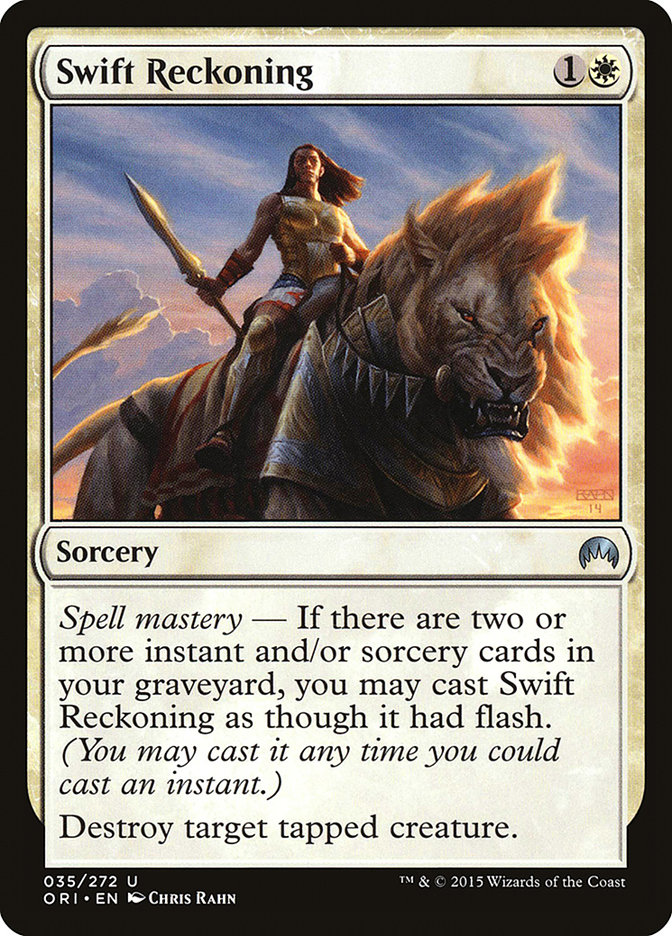
Swift Reckoning
Swift Reckoning is a Uncommon Sorcery from Magic Origins (35) in Magic: The Gathering. Mana cost {1}{W}. Color identity: W. Cactaur's latest catalog snapshot shows a market reference near $0.21 for ungraded copies.
Market
on eBayNo live listings right now.
Browse on eBayListings could not be loaded.
Some links may earn Cactaur a commission when you purchase on eBay.
Who is this card for?
Swift Reckoning suits collectors and players working on Magic Origins who need the Uncommon slot. This is typically a low-cost slot for master sets; avoid overpaying unless you need a specific finish or near-mint condition.
What is Swift Reckoning from Magic Origins?
Swift Reckoning is a Sorcery in Magic Origins numbered 35. Mana cost {1}{W}. Color identity: W. Swift Reckoning (35) from Magic Origins should be evaluated with set context, mana cost, color identity, and condition together. This printing is from Magic Origins. Collector number 35 distinguishes this printing from same-name cards in other sets.
What is Swift Reckoning worth today?
Cactaur tracks a market reference near $0.21 for Swift Reckoning. Low and high spread runs $0.21 to null. Per-finish references: cardmarket: $0.10; foil: $0.21; Normal: $0.06. This printing is from Magic Origins. Collector number 35 distinguishes this printing from same-name cards in other sets.
| Set | Magic Origins |
|---|---|
| Number | 35 |
| Rarity | Uncommon |
| TCGPlayer USD | $0.21 |
| Cardmarket EUR | €0.10 |
| cardmarket | $0.10 |
| foil | $0.21 |
| Normal | $0.06 |
Card stats
| Colors | W |
|---|
How collectible is Swift Reckoning?
Swift Reckoning is a Uncommon printing in Magic Origins. Master set builders use collector number and set symbol to track completion progress. This printing is from Magic Origins. Collector number 35 distinguishes this printing from same-name cards in other sets. Catalogued rarity: Uncommon.
What are the key details for Swift Reckoning?
Swift Reckoning lists as Sorcery with keywords Spell mastery. Artist: Chris Rahn. Rules text is indexed in the catalog for search and deck research. This printing is from Magic Origins. Collector number 35 distinguishes this printing from same-name cards in other sets.
Cactaur's take
Swift Reckoning (35) from Magic Origins should be evaluated with set context, mana cost, color identity, and condition together.
Pros
- Swift Reckoning is catalogued as Uncommon Sorcery in Magic Origins, making set and collector number verification straightforward.
- Public market data shows a reference near $0.21 across finishes (cardmarket: $0.10; foil: $0.21; Normal: $0.06).
- Mana cost {1}{W} and type line Sorcery help deck builders confirm the correct printing quickly.
Cons
- Raw market prices vary by condition and finish — near-mint estimates are not slab grades.
Verdict: Treat this as a low-stakes master-set slot unless you are paying for gem condition or a specific finish.
FAQ
What is Swift Reckoning from Magic Origins?
Swift Reckoning is a Uncommon Sorcery from Magic Origins numbered 35 in Magic: The Gathering. Cactaur indexes set, rarity, mana cost, and market references for this printing.
How much is Swift Reckoning worth?
Cactaur's catalog snapshot shows a market reference near $0.21 for ungraded Swift Reckoning. Condition, finish, and recent sold comps can move realized prices above or below that benchmark.
What rarity is Swift Reckoning?
Swift Reckoning is catalogued as Uncommon in Magic Origins. Use the collector number and set symbol on listings to confirm you are buying this exact printing.
Is Swift Reckoning legal in Commander or Standard?
Swift Reckoning shows format legality in historic, timeless, gladiator, pioneer based on our latest ingest. Always verify the exact printing and ban-list updates before registering a deck for an event.
Should I buy Swift Reckoning near mint or played?
Near-mint copies command the catalog reference near $0.21. Heavily played copies trade lower unless the card is a chase rare where any clean copy is scarce.
Related cards
- Akroan Jailer — Magic Origins
- Cleric of the Forward Order — Magic Origins
- Gnarlroot Trapper — Magic Origins
- Graveblade Marauder — Magic Origins
- Infernal Scarring — Magic Origins
- Infinite Obliteration — Magic Origins