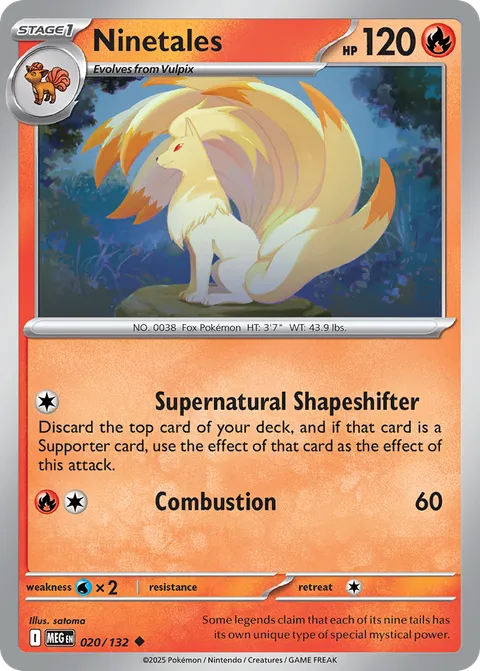
Ninetales
Ninetales is a Uncommon Pokémon TCG printing from Mega Evolution (#20). Cactaur's latest catalog snapshot shows a TCGPlayer market reference near $0.31 for ungraded copies. The set released in 2025. Compare recent sold listings for the same set, number, and finish before buying.
Market
on eBayNo live listings right now.
Browse on eBayListings could not be loaded.
Some links may earn Cactaur a commission when you purchase on eBay.
Who is this card for?
Ninetales suits collectors working on Mega Evolution who need the Uncommon slot. Compare listing photos to your target finish; skip impulse buys when variant or wear is unclear. This printing is from Mega Evolution.
What is Ninetales from Mega Evolution?
Ninetales is a Pokémon card in Mega Evolution numbered 20. It evolves from Vulpix. National Pokédex #38. This printing is from Mega Evolution. Collector number 20 distinguishes this printing from same-name cards in other sets. Catalogued rarity: Uncommon. The set released in 2025.
What is Ninetales worth today?
Cactaur tracks a TCGPlayer market reference near $0.31 for Ninetales. Low and high spread runs $0.01 to $999.00. Per-finish references: Reverse Holofoil: $0.31; Normal: $0.10. This printing is from Mega Evolution. Collector number 20 distinguishes this printing from same-name cards in other sets.
| Set | Mega Evolution |
|---|---|
| Number | 20 |
| Rarity | Uncommon |
| TCGPlayer USD | $0.31 |
| Cardmarket EUR | — |
| Reverse Holofoil | $0.31 |
| Normal | $0.10 |
Gameplay stats
| HP | 120 |
|---|---|
| Types | Fire |
| Evolves from | Vulpix |
| Supernatural Shapeshifter | Colorless Discard the top card of your deck, and if that card is a Supporter card, use the effect of that card as the effect of this attack. |
| Combustion | FireColorless 60 |
| Weakness | Water ×2 |
How collectible is Ninetales?
Ninetales is listed as Uncommon in Mega Evolution. Set collectors, type collectors, and art buyers may value this card differently — confirm variant before paying chase premiums. This printing is from Mega Evolution. Collector number 20 distinguishes this printing from same-name cards in other sets.
What are the key details for Ninetales?
Catalog fields: set Mega Evolution, rarity Uncommon, regulation I. Format status: Standard and Expanded. Cross-check holo pattern and language when buying online. This printing is from Mega Evolution. Collector number 20 distinguishes this printing from same-name cards in other sets. Catalogued rarity: Uncommon.
Cactaur's take
Ninetales from Mega Evolution should be evaluated with set context, finish, and condition together.
Pros
- Ninetales is catalogued as Uncommon printing in Mega Evolution, making set and number verification straightforward.
- Public market data shows a TCGPlayer reference near $0.31 across finishes (Reverse Holofoil: $0.31; Normal: $0.10).
Cons
- Raw market prices vary by condition, language, and holo variant — NM estimates are not slab grades.
Verdict: Use $0.31 as a benchmark, then adjust for finish, grade, and how quickly you need to buy or sell.
FAQ
How much is Ninetales worth?
Cactaur's catalog shows a TCGPlayer market reference near $0.31 for ungraded Ninetales from Mega Evolution. Actual value depends on condition, language, and finish such as holo or reverse holo.
What set is Ninetales from?
Ninetales is listed in Mega Evolution (Mega Evolution) as card #20. Always match both name and collector number because many Pokémon share names across sets.
How rare is Ninetales?
Our catalog lists Ninetales as Uncommon in Mega Evolution. Rarity guides pull rates but does not alone determine price — chase art, demand, and condition matter.
Is Ninetales good for collectors or players?
Ninetales includes gameplay stats in Mega Evolution. Players should review format legality; collectors often prioritize set symbol, number, and visual variant over raw power. This printing is from Mega Evolution.
What is the difference between holo and reverse holo Ninetales?
Finish variants of Ninetales carry separate market listings. Reverse Holofoil: $0.31; Normal: $0.10 before buying — sellers often mix up reverse holo and non-holo photos.